RBI

By Gurjot Singh , 14 February 2026

The Reserve Bank of India has sharpened its focus on ethics as a foundational pillar of financial stability, warning that regulatory compliance alone cannot safeguard the banking system. In recent remarks, the central bank underscored the need for integrity-driven governance, transparent decision-making, and robust accountability mechanisms across public and private lenders. The emphasis comes amid rising concerns over mis-selling, governance lapses, and reputational risks that threaten depositor confidence.

By Gurjot Singh , 25 January 2026

The government has approved long-awaited wage and pension revisions for employees of public sector insurance companies, the National Bank for Agriculture and Rural Development (NABARD), and the Reserve Bank of India (RBI), providing significant relief to thousands of current and retired staff. The decision aligns compensation structures with evolving economic conditions and inflationary trends, while addressing long-pending demands from employee unions.

By Binnypriya Singh , 15 January 2026

The Reserve Bank of India has introduced significant changes to foreign exchange regulations governing banks, aiming to modernize forex operations, improve compliance, and strengthen risk management frameworks. The revised rules are designed to simplify procedures, provide greater operational flexibility to banks, and align India’s forex regime with evolving global standards. By refining reporting norms, exposure limits, and transaction guidelines, the central bank seeks to reduce systemic risks while supporting smoother cross-border trade and capital flows.

By Binnypriya Singh , 14 January 2026

The Reserve Bank of India (RBI) is set to resume issuing licenses to urban co-operative banks (UCBs), marking a significant policy shift after years of regulatory restraint. The move reflects improved governance standards, tighter supervision, and a more robust regulatory framework within the co-operative banking sector. By reopening the licensing window, the central bank aims to strengthen financial inclusion, enhance credit access for small businesses and local communities, and encourage consolidation-driven stability.

By Gurjot Singh , 12 January 2026

A renewed debate over transparency in India’s banking system has emerged as the Central Information Commission (CIC) examines a dispute involving the Reserve Bank of India (RBI), commercial banks, and the disclosure of non-performing asset (NPA) data under the Right to Information (RTI) Act. At the heart of the matter is whether detailed borrower-level NPA information should be made public in the interest of accountability or protected to preserve financial stability and confidentiality.

By Binnypriya Singh , 26 December 2025

The Reserve Bank of India has decided to defer the second phase of its enhanced cheque-clearing framework, a move aimed at ensuring operational stability and adequate preparedness across banks. The proposed upgrade was designed to further reduce cheque realisation timelines under the Cheque Truncation System (CTS), building on gains achieved in earlier phases. However, feedback from stakeholders highlighted the need for additional testing, infrastructure alignment, and risk mitigation.

By Tushar Sharma , 15 December 2025

The Reserve Bank of India has directed banks to link loans extended to micro, small and medium enterprises (MSMEs) with an external benchmark, a move aimed at strengthening monetary policy transmission and improving pricing transparency. By aligning lending rates with an independent reference, the central bank seeks to ensure that changes in policy rates are passed on more efficiently to small businesses.

By Gurjot Singh , 2 December 2025

The Reserve Bank of India (RBI) has recorded a fresh inflow of ₹74 crore worth of ₹2,000 banknotes during November — reducing the outstanding notes in circulation to ₹5,743 crore as of November 29, 2025. The withdrawal of the ₹2,000 denomination was first announced in May 2023; while these notes remain legal tender, the bulk have been returned via bank deposit/exchange and postal-enabled RBI channels. The latest deposit underscores steady progress in phasing out high-denomination notes and reflects continued public compliance nearly two and a half years since the withdrawal directive.

By Binnypriya Singh , 1 December 2025

India’s financial markets are poised for a crucial week as investors await the Reserve Bank of India’s upcoming monetary policy decision, a move widely expected to influence near-term liquidity conditions, borrowing costs, and overall risk sentiment. With inflation moderating yet remaining above the central bank’s comfort zone, policymakers face the delicate task of maintaining price stability without constraining growth. Market participants are closely monitoring signals on interest rates, liquidity management, and the broader economic outlook.

By Gurjot Singh , 30 November 2025

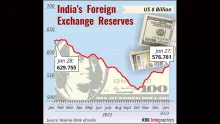
India’s foreign exchange reserves witnessed a decline in the latest Reserve Bank of India (RBI) data, reflecting market dynamics and currency valuation adjustments. The drop in reserves, which form a crucial buffer against external shocks, highlights ongoing interventions by the central bank to manage currency volatility and maintain macroeconomic stability. Analysts note that such fluctuations are often influenced by global interest rate trends, capital outflows, and trade balance movements.