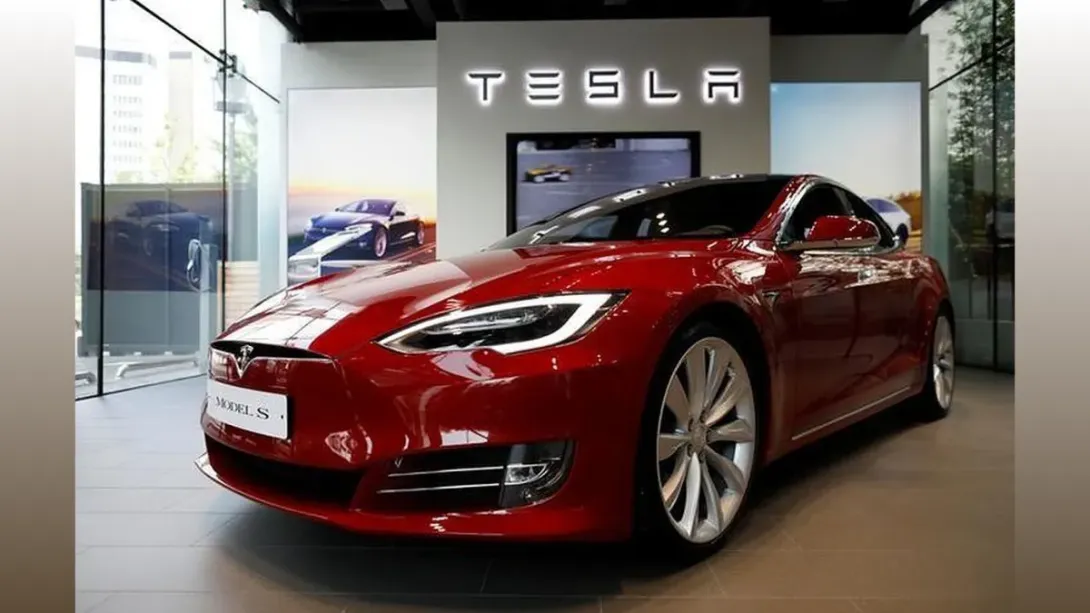
In a significant development for India’s electric mobility ambitions, the Haryana government has extended an invitation to Tesla Inc. to set up a manufacturing facility in the state. The move comes amid the central government’s efforts to attract global electric vehicle (EV) manufacturers under its renewed investment and localization policies. Haryana, already a major automotive hub, aims to position itself as a frontrunner in India’s EV ecosystem by offering incentives, infrastructure, and a skilled workforce to global players like Tesla. The proposal underscores India’s commitment to green mobility and sustainable industrial growth.
Haryana Eyes Global EV Giants
Haryana’s invitation to Tesla reflects the state’s growing focus on electric vehicle manufacturing and sustainable mobility solutions. With major automotive players such as Maruti Suzuki, Hero MotoCorp, and Honda already operating large-scale facilities in the region, the state government envisions creating an integrated EV cluster that caters to both domestic and export markets.
According to officials, discussions are underway to explore potential sites within industrial corridors such as Gurugram-Manesar and Faridabad-Palwal, known for their robust infrastructure and proximity to the National Capital Region. The state is likely to extend fiscal incentives, power subsidies, and land support under its Electric Vehicle Policy 2022, which aims to attract high-value investments and promote local component manufacturing.
Aligning with India’s National EV Strategy
The invitation aligns with India’s broader strategy to accelerate EV adoption and attract foreign direct investment (FDI) in advanced automotive technologies. The Union government recently introduced a liberalized EV manufacturing policy allowing global automakers to import a limited number of vehicles at reduced duties, provided they commit to establishing manufacturing units in India within a defined timeframe.
Tesla, which has been exploring India as a potential production base since 2021, could benefit from the policy if it chooses to localize manufacturing and supply chains. Haryana’s strategic location, developed logistics network, and access to Delhi’s consumer base make it an appealing choice for the American EV maker.
Industry experts believe that a Tesla facility in India would not only boost technological collaboration and employment generation but also help establish the country as a key player in global EV supply chains.
Competitive State-Level Pitch for Tesla
While Haryana’s offer is promising, Tesla has also received similar invitations from other states including Gujarat, Maharashtra, and Tamil Nadu—each vying to host the EV giant’s first manufacturing plant in India. These states have strong automotive ecosystems and export-oriented ports, making the competition intense.
Haryana, however, holds an advantage due to its established auto manufacturing base and close connectivity with India’s financial and political capital regions. The state government has emphasized its commitment to providing a single-window clearance system, streamlined approvals, and a supportive regulatory environment to facilitate Tesla’s entry.
The potential investment is expected to create a ripple effect across the EV ecosystem, fostering growth in battery manufacturing, charging infrastructure, and renewable energy integration.
Implications for India’s Electric Vehicle Ecosystem
Tesla’s entry into India could prove transformative for the country’s EV adoption trajectory. Industry analysts project that India’s EV market could reach Rs. 3 lakh crore by 2030, with significant contributions from passenger vehicles, two-wheelers, and commercial fleets.
A local Tesla plant would enhance India’s position in the global EV supply network, enabling domestic production of high-performance vehicles, batteries, and powertrain components. It would also drive competition and innovation among local automakers, accelerating the shift toward cleaner technologies.
Moreover, Tesla’s presence could catalyze foreign partnerships, R&D collaborations, and supply chain localization, which are essential for reducing production costs and promoting sustainable growth in the sector.
A Step Toward Green Industrial Transformation
The Haryana government’s outreach to Tesla reflects its forward-looking industrial policy centered on sustainability, innovation, and global integration. As India pushes to decarbonize its transport sector, partnerships with leading EV manufacturers like Tesla could play a pivotal role in achieving climate targets and enhancing technological self-reliance.
If Tesla chooses Haryana as its base, the move could serve as a symbolic and strategic milestone—reinforcing India’s emergence as a major hub for green manufacturing and future mobility.
Conclusion
Haryana’s invitation to Tesla underscores India’s growing determination to attract top-tier global manufacturers to its evolving electric vehicle ecosystem. By combining policy incentives, strategic location advantages, and a mature industrial infrastructure, the state positions itself as a strong contender in the race to host Tesla’s first Indian plant. Should the partnership materialize, it could redefine the trajectory of India’s EV landscape, blending economic opportunity with environmental responsibility in a landmark step toward sustainable industrial transformation.
Comments