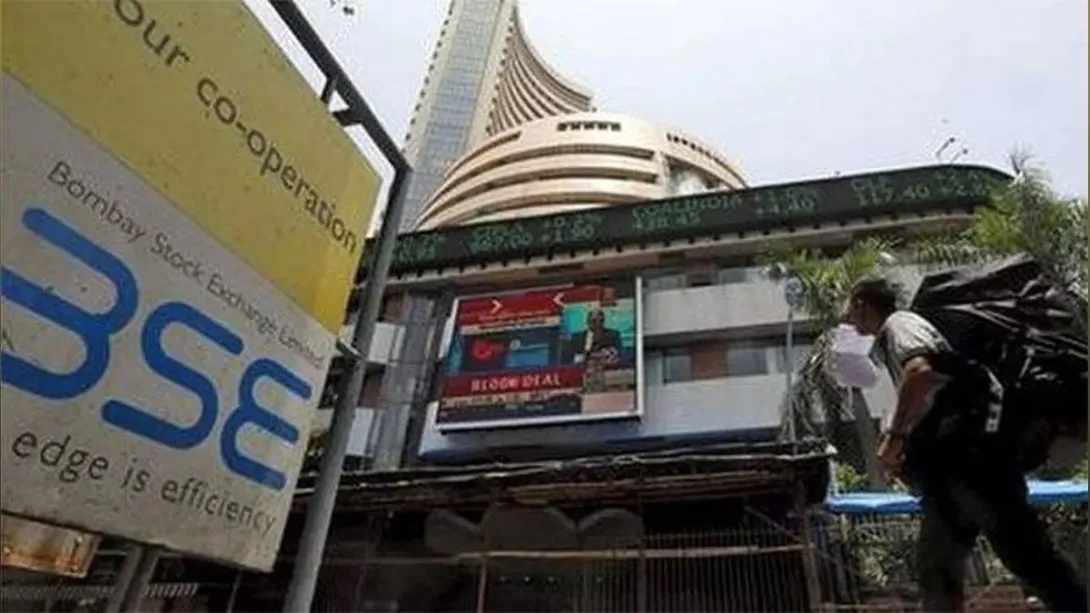
Indian stock markets fell sharply on Monday, with the benchmark BSE Sensex slipping below the 82,000 mark amid rising geopolitical tensions and investor caution. Weak global cues, including volatility in U.S. markets and crude oil price fluctuations, compounded domestic concerns, prompting profit-taking in key sectors. Market analysts pointed out that heightened uncertainty over international relations and macroeconomic stability has triggered short-term selling, particularly in banking, energy, and IT stocks. Despite the decline, long-term fundamentals—strong corporate earnings, economic reforms, and liquidity support—suggest that the dip may present buying opportunities for investors looking beyond short-term volatility.
Market Performance Overview
The BSE Sensex fell by approximately 1.2%, closing at 81,950, while the NSE Nifty 50 dropped 1.1% to 24,520. Broader indices also mirrored the negative trend, with mid- and small-cap stocks witnessing significant declines. Banking stocks, led by ICICI Bank and HDFC Bank, were among the hardest hit, reflecting investor caution over credit growth and global economic pressures.
Factors Driving the Decline
Several key factors contributed to the market slump:
Geopolitical Tensions: Rising conflicts in key regions prompted risk-averse sentiment among domestic and foreign investors.
Global Market Volatility: Weak U.S. and European indices, coupled with a rising dollar, pressured emerging market equities, including India.
Crude Oil Fluctuations: Brent crude prices surged above Rs. 7,500 per barrel, raising concerns over inflationary pressures and corporate margins.
Profit-Taking: Following a sustained rally over recent months, investors booked profits in index-heavy stocks, further adding to market pressure.
Sectoral Impact
Banking & Financial Services: Declined by 2.3%, reflecting investor caution over interest rate trends and non-performing assets.
IT & Technology: Dropped 1.5% amid weak global tech indices and profit-booking.
Energy: Fell 1.8% as rising crude prices sparked concerns about input costs and government subsidies.
Pharma & FMCG: Relatively stable, showing resilience due to defensive characteristics in times of uncertainty.
Investor Sentiment & Outlook
Market experts suggest that the current dip is primarily driven by short-term uncertainty and risk-off sentiment. Long-term investors are advised to focus on fundamental strengths such as India’s domestic consumption, reforms in infrastructure and manufacturing, and robust corporate earnings. Volatility in the near term could present selective buying opportunities in fundamentally strong stocks.
Conclusion
While the Sensex’s drop below 82,000 reflects immediate market jitters amid geopolitical and global economic uncertainties, India’s stock markets remain underpinned by strong macroeconomic fundamentals. Strategic policy reforms, domestic consumption growth, and investor confidence in India’s long-term growth story suggest that the decline is likely a temporary correction rather than a sustained downtrend.
Comments