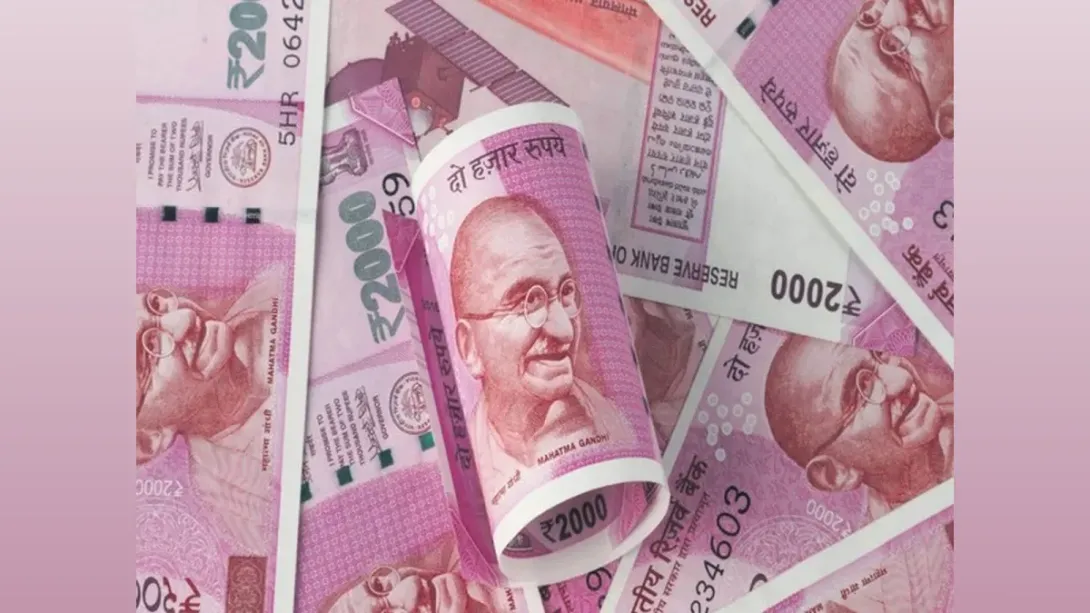
The Reserve Bank of India (RBI) has recorded a fresh inflow of ₹74 crore worth of ₹2,000 banknotes during November — reducing the outstanding notes in circulation to ₹5,743 crore as of November 29, 2025. The withdrawal of the ₹2,000 denomination was first announced in May 2023; while these notes remain legal tender, the bulk have been returned via bank deposit/exchange and postal-enabled RBI channels. The latest deposit underscores steady progress in phasing out high-denomination notes and reflects continued public compliance nearly two and a half years since the withdrawal directive.
---
Historical Context: From Introduction to Withdrawal
The ₹2,000 note was introduced in November 2016 to rapidly replenish currency supply following the high-denomination notes withdrawn during demonetisation.
However, with currency needs stabilising and in pursuit of cleaner, more secure circulation, the RBI formally announced on May 19, 2023 that the ₹2,000 note would be withdrawn from active issuance.
Though printing ceased and banks stopped distributing new ₹2,000 notes, existing notes were allowed to remain legal tender — with structured mechanisms for deposit or exchange by holders over a transition period.
---
Withdrawal Mechanism and Public Options
Initially, all bank branches across India offered exchange/deposit facilities for ₹2,000 notes until October 7, 2023.
Subsequently, the RBI’s 19 designated Issue Offices assumed the responsibility. From October 9, 2023 onwards, individuals and entities could deposit or exchange their ₹2,000 notes there.
For added convenience, holders have been permitted to send ₹2,000 notes via the national postal service to any of the Issue Offices — which then credit the equivalent amount to their bank accounts, subject to regulatory compliance and KYC norms.
These measures support a gradual but orderly phasing out of the denomination, without abruptly invalidating legal tender or disrupting cash-based transactions.
---
The November Update: Numbers and Significance
According to the latest disclosure, the RBI received ₹74 crore worth of ₹2,000 notes during November.
This reduces the total outstanding volume to ₹5,743 crore as of November 29, 2025 — down from ₹5,817 crore at end-October.
To put this in perspective: when the withdrawal was announced in May 2023, the total value of ₹2,000 notes in circulation stood at ₹3.56 lakh crore.
Thus, more than 98 per cent of the high-denomination currency has now been returned to the banking system, evidencing substantial compliance and effective implementation of the RBI’s withdrawal strategy.
---
Broader Implications: Currency Hygiene, Cash Flow, and Financial Oversight
✅ Strengthening Currency Quality and Integrity
The withdrawal aligns with the RBI’s “clean-note” policy — aimed at removing banknotes nearing end of life or prone to misuse, thereby maintaining better quality and security in circulation.
Moreover, phasing out high-value notes helps reduce the risk of hoarding, tax evasion, and untraceable cash accumulation — contributing to greater financial transparency.
🔄 Impact on Cash Circulation Dynamics
With ₹2,000 notes becoming scarce, the share of lower-denomination banknotes (₹500, ₹200, ₹100, etc.) will likely rise, reshaping the denomination mix in daily cash transactions.
This may affect liquidity in cash-intensive sectors, such as retail, informal trade, and small-value transactions, possibly nudging greater use of formal banking channels or digital payments over time.
📊 Symbolic Move Toward Formalisation
The nearly complete recall of ₹2,000 notes underscores the ability of regulatory mechanisms to guide large-scale cash conversion without abrupt disruption — reinforcing public confidence in the banking system and regulatory prudence.
---
What Holders Should Know — And What to Watch
Individuals or businesses still holding ₹2,000 notes can deposit or exchange them at any of the 19 RBI Issue Offices, subject to applicable KYC norms.
Alternatively, notes can be posted via India Post to any RBI Issue Office for account credit — allowing holders to monetise inactive currency without physically visiting RBI offices.
The ₹2,000 note continues to be legal tender — i.e., valid for transactions — though its acceptance may dwindle as circulation declines.
Investors, economists, and policymakers should monitor residual circulation levels, as the remaining unreturned notes may offer insight into informal-economy cash retention and currency-holding behaviour.
---
Concluding Observations
The November inflow of ₹74 crore in ₹2,000 notes to the RBI, while modest in isolation, represents another incremental stride toward the full phasing out of high-denomination currency. With over 98 per cent already returned, the ₹2,000 note is fast becoming a rarity in active circulation — its legacy shifting toward being a transitional currency of the post-demonetisation era. The orchestration of its withdrawal, via smoothly managed banking and postal channels, demonstrates the RBI’s capacity to execute large-scale currency reforms without disruption.
For policymakers, the episode offers a case study in currency management and formalisation. For ordinary citizens, it is a reminder to exchange any remaining ₹2,000 notes — while compliance remains straightforward. As India’s cash landscape evolves, this quiet but consequential lop-off of high-denomination notes may mark a subtle, yet structural, shift in how money flows across wallets, banks, and the economy at large.
Comments