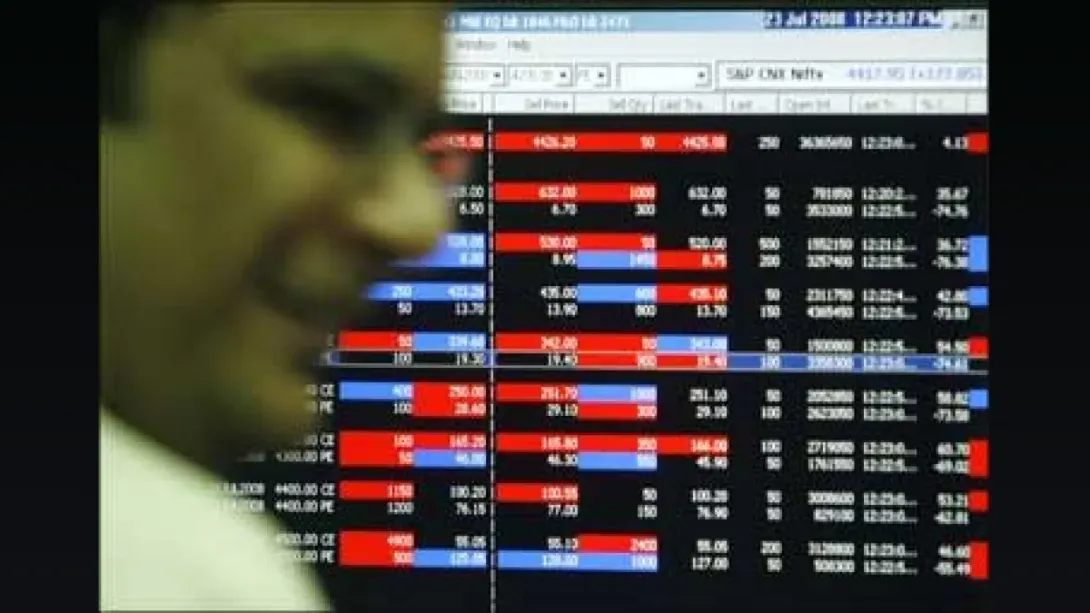
Indian equity markets experienced heightened volatility, with benchmark indices swinging sharply before closing lower as selling pressure intensified in services and consumer-oriented stocks. Investors reacted to mixed macroeconomic signals, cautious global cues and valuation concerns in defensive sectors. Profit booking in high-multiple consumer names and weakness in select IT and financial services counters dragged broader indices into negative territory. Market participants cited concerns over earnings visibility, inflationary pressures and global liquidity conditions as key factors behind the choppy trading session. Analysts suggest near-term volatility may persist as investors reassess sector allocations and await clearer economic indicators.
Volatility Returns to Dalal Street
Indian equities witnessed pronounced intraday fluctuations as benchmark indices grappled with sustained selling in services and consumer segments. After opening on a cautiously optimistic note, markets reversed gains amid intensifying risk aversion.
Broader market breadth remained negative through most of the session, indicating widespread pressure rather than isolated stock-specific declines. Traders pointed to a combination of global uncertainty and domestic earnings recalibration as triggers for the sharp swings.
The session reflected a fragile equilibrium, with institutional investors alternating between selective buying and defensive repositioning.
Services Sector Under Pressure
Shares of major services-oriented companies, including information technology and financial services firms, faced renewed selling. Concerns around global demand moderation and currency volatility weighed particularly on export-driven IT counters.
Companies such as Tata Consultancy Services and Infosys saw muted investor interest amid cautious forward guidance across the sector.
Financial services stocks also traded lower, reflecting apprehension about credit growth sustainability and margin compression. Analysts noted that elevated valuations in select large-cap names made them vulnerable to profit booking.
Consumer Stocks Lose Defensive Appeal
Traditionally considered safe havens during uncertain market conditions, consumer goods companies experienced significant declines. Investors trimmed positions in high-valuation counters as input cost pressures and rural demand moderation resurfaced as concerns.
Shares of Hindustan Unilever and Nestle India traded lower, reflecting cautious sentiment toward near-term earnings growth.
Market strategists observed that defensive sectors, which had previously outperformed, are now facing valuation normalization as investors rotate capital toward cyclical and infrastructure-linked opportunities.
Global Cues and Macro Signals
International market developments contributed to domestic volatility. Uncertainty surrounding global interest rate trajectories and inflationary trends influenced foreign portfolio flows.
Currency fluctuations and rising commodity prices added further complexity to investor decision-making. With crude oil exhibiting intermittent price spikes, concerns about imported inflation resurfaced, potentially affecting corporate margins.
Domestically, investors are closely monitoring industrial output data, inflation readings and policy commentary for clearer direction on economic momentum.
Institutional Activity and Liquidity Trends
Market participants reported mixed activity from foreign institutional investors (FIIs) and domestic institutional investors (DIIs). While selective accumulation was visible in infrastructure and capital goods counters, broader risk appetite remained subdued.
Liquidity conditions remain supportive in structural terms, but near-term sentiment is being shaped by global capital flow volatility. Analysts emphasize that sharp intraday movements are indicative of algorithmic and short-term trading strategies dominating the session.
Outlook: Navigating Uncertainty
Market experts caution that volatility may persist in the coming weeks as investors recalibrate portfolios ahead of earnings announcements and macroeconomic releases.
Despite near-term headwinds, India’s structural growth narrative remains intact, underpinned by steady domestic consumption, infrastructure expansion and digital transformation initiatives. However, stretched valuations in certain sectors may require consolidation before the next sustained rally.
Comments