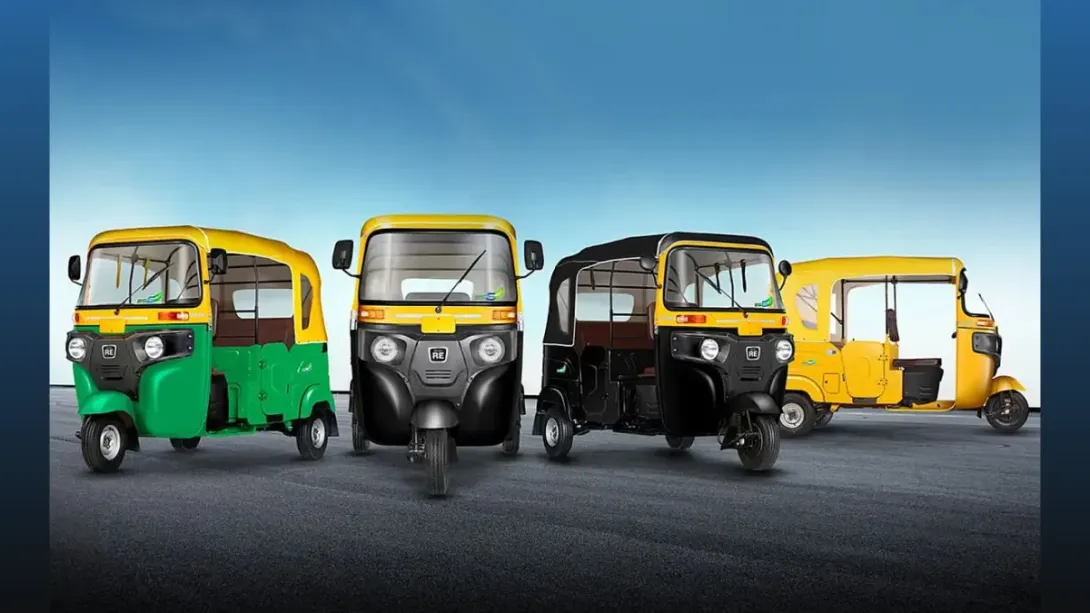
Homegrown auto major Bajaj Auto has raised concerns about the effectiveness of Maharashtra’s electric vehicle policy, cautioning that regulatory uncertainty and implementation gaps could deter future investments. The company signaled that inconsistent incentive structures and delays in subsidy disbursement risk undermining industry confidence at a critical juncture in India’s EV transition. Maharashtra, one of the country’s largest automotive hubs, has been positioning itself as a leader in electric mobility. However, industry stakeholders now warn that policy misalignment may slow manufacturing expansion, supply chain development and job creation in the state.
Industry Signals Policy Friction
Bajaj Auto has expressed reservations regarding the execution and clarity of Maharashtra’s electric vehicle policy framework. Senior company officials indicated that while the state’s ambition to promote EV adoption is commendable, structural bottlenecks in implementation have raised operational concerns.
The electric mobility sector requires predictable, long-term policy support. Manufacturers investing in new production lines, battery assembly units and research facilities depend on clear fiscal incentives and stable regulatory environments.
Any deviation from announced policy commitments, executives argue, could disrupt capital allocation decisions and undermine investor confidence.
Maharashtra’s Strategic Importance in Automotive Manufacturing
Maharashtra has long served as a critical automotive manufacturing hub, hosting large-scale production facilities and a vast supplier ecosystem. The state’s industrial infrastructure, logistics connectivity and skilled workforce make it an attractive destination for EV manufacturing.
In recent years, the state government introduced incentive packages aimed at accelerating electric vehicle production and adoption. These measures included subsidies, tax concessions and infrastructure support for charging networks.
However, industry feedback suggests that execution timelines and clarity around eligibility norms have not fully matched policy announcements.
Incentive Structures and Implementation Gaps
Automakers emphasize that incentive disbursement delays can materially impact cash flows, especially during the early stages of EV ramp-up. Transitioning from internal combustion engine vehicles to electric platforms entails significant upfront investment in tooling, battery technology and supply chain reconfiguration.
If subsidy reimbursements are deferred or administrative processes become protracted, companies may face working capital strain.
Bajaj’s warning reflects a broader industry sentiment that policy predictability is as critical as policy generosity.
Investments in EV ecosystems are capital-intensive and often span multiple years before achieving scale efficiencies.
Competitive Federalism and Investment Allocation
India’s states are increasingly competing to attract EV investments. Regions offering streamlined approvals, transparent incentive structures and infrastructure readiness have secured large commitments from domestic and global manufacturers.
Maharashtra’s policy ambitions position it as a potential leader, but competitive pressure from other states could influence future investment flows.
Corporate boards evaluating plant expansions often compare incentive clarity, land acquisition processes and power tariff stability across jurisdictions.
Bajaj’s concerns highlight the importance of aligning policy vision with administrative efficiency.
Broader Implications for India’s EV Transition
India’s electric mobility roadmap is central to its energy transition goals and emission reduction commitments. The automotive industry’s cooperation is vital to scaling production and lowering consumer prices.
Policy inconsistency at the state level may create fragmentation within the national EV ecosystem. Manufacturers benefit from harmonized frameworks that reduce compliance complexity and encourage long-term planning.
Industry analysts note that India’s EV penetration remains in early stages. Sustained policy support is necessary to accelerate consumer adoption and domestic battery manufacturing.
Financial and Market Impact
Although Bajaj did not quantify potential investment revisions, market participants interpret such public caution as a signal of strategic recalibration. Capital allocation decisions in the automotive sector often involve multi-thousand-crore commitments.
Investor sentiment toward EV-focused companies is closely tied to regulatory stability and infrastructure development. Any perception of policy friction can influence valuations, particularly in growth-oriented segments.
Nonetheless, Maharashtra retains significant structural advantages, including proximity to ports and established supplier networks.
The Path Forward
Industry observers suggest that constructive dialogue between policymakers and manufacturers could address execution challenges. Clear timelines for incentive disbursement, streamlined documentation requirements and enhanced coordination among departments may restore confidence.
Electric vehicle ecosystems depend on collaboration across government, manufacturers, suppliers and financiers.
For Maharashtra, resolving policy ambiguities could reinforce its position as a manufacturing powerhouse in the evolving mobility landscape.
Conclusion
Bajaj Auto’s cautionary remarks underscore the delicate balance between policy ambition and operational execution in India’s electric vehicle transition. While Maharashtra has articulated a forward-looking EV vision, effective implementation will determine whether it can sustain investor trust and attract long-term capital.
As India accelerates toward electrification, regulatory clarity and administrative agility will prove decisive. In a sector defined by rapid technological evolution and high capital intensity, policy credibility is not merely supportive — it is foundational to industrial transformation.
Comments