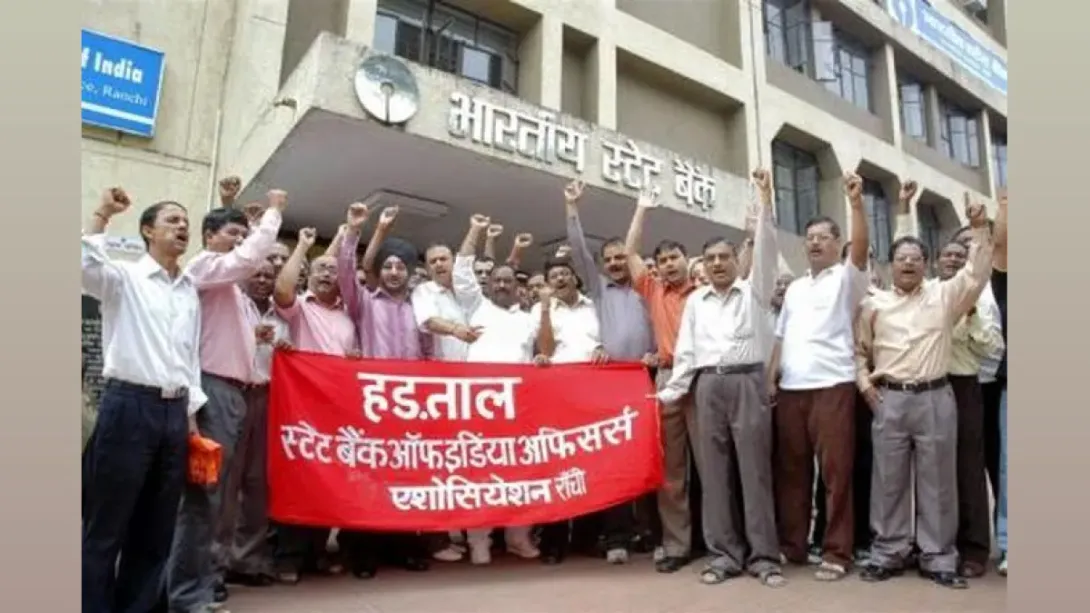
Officers of Indian Overseas Bank launched a coordinated strike, disrupting services across several regions as employee unions protested what they described as coercive and target-driven management practices. The action reflects mounting unease within public sector banks, where staff argue that escalating business targets, constant monitoring, and punitive performance reviews are undermining professional autonomy and ethical banking norms. Officers say the pressure to deliver aggressive growth has intensified without adequate operational support. The strike has brought renewed focus on labor-management relations in state-owned banks navigating competitive, regulatory, and digital transformation challenges.
Strike Highlights Workplace Tensions
Normal banking operations at multiple Indian Overseas Bank branches were affected after officers collectively abstained from work. Core functions, including credit approvals, customer servicing, and internal reviews, faced slowdowns as unions pressed for immediate intervention from senior management.
According to employee representatives, the strike followed repeated appeals to address mounting workplace stress that they claim has become embedded in daily operations.
Allegations of Coercive Target Enforcement
Union leaders allege that officers are being subjected to unrealistic business targets, frequent reviews, and implicit threats of adverse performance ratings. They argue that such practices blur the line between accountability and intimidation, forcing officers to prioritize numerical targets over prudent risk assessment.
The concerns are particularly acute in semi-urban and rural branches, where officers say local economic conditions make rapid growth targets impractical and professionally risky.
Management Goals Versus Public Sector Mandate
Bank management has consistently emphasized the need to improve productivity, profitability, and market share amid intensifying competition from private lenders and fintech firms. Officers, however, argue that public sector banks operate under broader mandates, including financial inclusion, regulatory compliance, and social banking objectives.
This divergence has fueled friction, with employees warning that excessive pressure could weaken credit discipline and expose banks to long-term asset quality risks.
Wider Implications for Public Sector Banks
The IOB strike reflects a broader pattern of labor unrest across state-owned banks as institutions attempt to modernize operations and adopt performance-linked frameworks. Analysts note that while efficiency gains are essential, sustained employee dissatisfaction can erode morale, customer service quality, and institutional stability.
The episode underscores the challenge of reforming legacy banking systems without alienating the workforce responsible for execution.
Path Toward Resolution
Officers’ associations have called for structured dialogue with top management to reassess performance metrics, review evaluation mechanisms, and establish safeguards against coercive practices. Observers say early engagement will be critical to restoring normal operations and preventing prolonged disruption.
As public sector banks continue to recalibrate their strategies, the IOB strike serves as a reminder that sustainable transformation depends as much on human capital management as on financial performance.
Comments