India News

By Sachman Kochar , 12 January 2026

India’s economic resilience and growing global influence have drawn praise from industry leaders, with Reliance Industries Chairman Mukesh Ambani commending Prime Minister Narendra Modi’s leadership. Speaking on India’s ability to withstand global disruptions, Ambani highlighted the country’s structural reforms, digital transformation, and policy stability as key drivers of sustained growth. Despite geopolitical tensions and economic headwinds worldwide, India has maintained momentum through strong domestic demand and long-term investment planning.

By Eknath Deshpande , 6 January 2026

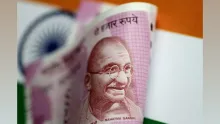
The Indian rupee weakened to 90.28 against the US dollar, reflecting sustained pressure from global economic uncertainty, rising demand for the greenback, and cautious investor sentiment. The decline comes amid persistent strength in the US currency, volatile crude oil prices, and uneven capital flows into emerging markets. While domestic fundamentals remain relatively stable, external factors continue to dominate near-term currency movements.

By Binnypriya Singh , 3 January 2026

The Indian rupee weakened further and slipped beyond the critical 90-per-dollar threshold, closing the session at 90.20 against the US dollar. The decline reflects continued pressure from a strong dollar, persistent foreign fund outflows, and elevated global uncertainty. Currency markets remained cautious as investors reacted to signals of prolonged tight monetary conditions in major economies and rising geopolitical risks.

By Tushar Sharma , 17 December 2025

The Indian rupee fell to a fresh all-time low of ₹90.7 against the US dollar, reflecting sustained external pressures and market volatility. Currency analysts attribute the depreciation to factors including strong dollar strength, rising crude oil prices, and persistent capital outflows from emerging markets. The weakening rupee has implications for import costs, inflation, and corporate earnings, particularly for sectors dependent on foreign procurement. Policymakers and investors are closely monitoring the situation, as currency stability is critical for economic growth.

By Binnypriya Singh , 4 December 2025

The Indian rupee extended its downward trajectory on Wednesday, hitting a historic low of Rs.90.43 against the US dollar amid persistent global uncertainty and strong demand for the greenback. Currency markets reacted to heightened geopolitical tensions, elevated crude oil prices, and sustained foreign fund outflows. The widening trade deficit and expectations of firm US interest rates also pressured the domestic currency. Despite the Reserve Bank of India’s ongoing efforts to maintain stability, the rupee’s latest slide underscores the challenges facing emerging-market currencies.

By Eknath Deshpande , 25 November 2025

The Indian rupee is once again confronting significant downward pressure as global monetary tightening, persistent trade imbalances, and uneven capital inflows converge to weaken the currency. A stronger U.S. dollar, combined with India’s heavy import dependence and subdued exporter hedging, has contributed to a widening gap between foreign-exchange demand and supply. Despite assurances from the Reserve Bank of India (RBI) that it does not defend any predetermined exchange-rate level, its growing interventions highlight the heightened volatility in the currency market.

By Eknath Deshpande , 1 November 2025

Nearly a year after the Reserve Bank of India (RBI) announced the withdrawal of Rs 2,000 denomination notes, around Rs 5,817 crore worth of these high-value bills remain in circulation. While most of the currency has returned to the banking system, a small fraction continues to be held by individuals or entities. The central bank confirmed that exchange and deposit options for the withdrawn notes remain available at its regional offices.

By Binnypriya Singh , 19 October 2025

At the G20 Environment Ministers' Meeting in Cape Town, South Africa, India's Environment Minister Bhupender Yadav emphasized that financial support for climate action in developing countries should be viewed as a duty by developed nations, not a mere promise. Yadav's statement underscores India's call for developed countries to fulfill their climate finance commitments, highlighting the urgency of addressing climate change through collective and inclusive action.

By Binnypriya Singh , 16 October 2025

The Indian government has extended the tenure of the 16th Finance Commission by one month, setting the new deadline for its report submission to November 30, 2025. Chaired by former NITI Aayog Vice-Chairman Arvind Panagariya, the Commission is tasked with recommending the distribution of central taxes between the Union and states for the period April 1, 2026, to March 31, 2031. This extension allows the Commission additional time to finalize its recommendations, which have significant implications for India's fiscal federalism.

By Gurjot Singh , 15 October 2025

India is positioning itself as a pivotal advocate for developing nations at the upcoming COP30 climate summit in Belém, Brazil. Union Environment Minister Bhupender Yadav has emphasized the urgent need for substantial climate finance and a shift towards adaptation-focused strategies. India is advocating for a significant increase in financial commitments, highlighting the inadequacy of current pledges and underscoring the necessity for developed countries to fulfill their obligations under the principle of Common But Differentiated Responsibilities (CBDR).