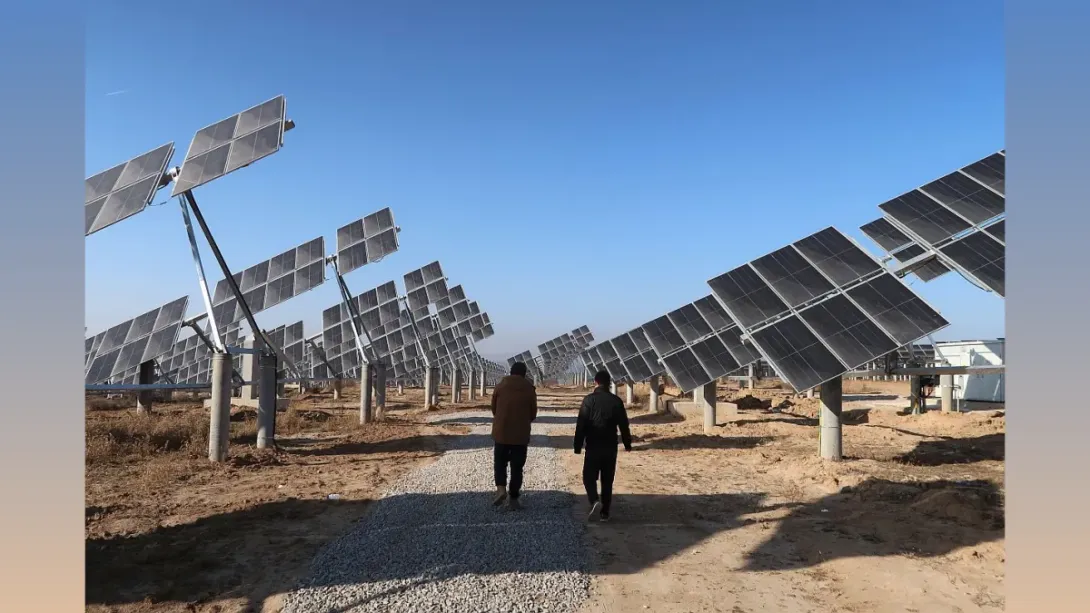
Renewable energy company Saatvik Green Energy has reported a significant rise in profit for the quarter ended June 2025, buoyed by higher solar module sales, capacity expansion, and growing demand for clean energy solutions. The company’s robust quarterly performance reflects India’s accelerating shift toward sustainable power generation and the increasing appetite for domestically manufactured solar components. With expanding production facilities and a strategic focus on innovation and exports, Saatvik Green Energy continues to strengthen its financial position while playing a pivotal role in supporting the nation’s renewable energy goals.
---
Strong Financial Performance in Q1 FY2025–26
Saatvik Green Energy posted a notable year-on-year increase in its net profit during the June quarter, driven by strong operational efficiency and higher order volumes. Revenue also registered healthy growth, supported by surging demand for solar panels across both domestic and international markets.
According to company officials, consistent investments in technology upgrades and supply chain optimization have contributed to improved margins. The firm’s performance aligns with the broader momentum in India’s renewable sector, as policy incentives and climate commitments continue to encourage industrial and residential adoption of solar power.
---
Rising Demand and Capacity Expansion
The company’s impressive results come at a time when India’s renewable energy ecosystem is witnessing exponential growth. Saatvik Green Energy has strategically expanded its production capacity to meet increasing market requirements, particularly from large-scale solar parks and government-led clean energy initiatives.
The firm’s state-of-the-art manufacturing facilities are capable of producing high-efficiency photovoltaic (PV) modules designed to withstand diverse climatic conditions. This scalability, combined with the government’s emphasis on “Make in India” and import substitution, has enabled Saatvik to capture a larger share of the domestic solar market.
---
Focus on Technology and Export Growth
To maintain its competitive edge, Saatvik Green Energy has intensified its focus on research and development, targeting innovations in module efficiency, lightweight design, and sustainable material sourcing. The company has also begun expanding its footprint in global markets, exporting to regions such as the Middle East, Africa, and Southeast Asia.
Industry analysts note that this diversification strategy not only broadens Saatvik’s revenue streams but also positions it favorably amid fluctuating raw material costs and global supply chain challenges. The export momentum further reinforces India’s emergence as a reliable hub for renewable manufacturing.
---
Policy Tailwinds and Market Outlook
The firm’s growth trajectory is supported by strong policy backing from the Indian government, including the Production Linked Incentive (PLI) scheme for solar manufacturing and the country’s ambitious goal of achieving 500 GW of renewable energy capacity by 2030. These initiatives have significantly boosted investor confidence and accelerated capacity additions across the industry.
Experts believe that continued focus on energy independence, declining solar installation costs, and favorable financing conditions will sustain high growth rates in the sector. Saatvik Green Energy, with its proven track record and agile operations, appears well positioned to capitalize on these opportunities.
---
Conclusion
Saatvik Green Energy’s stellar June quarter performance underscores its growing prominence in India’s renewable energy landscape. The company’s blend of financial discipline, technological innovation, and strategic expansion highlights its resilience in a fast-evolving industry.
As India intensifies its push toward sustainability and green infrastructure, Saatvik’s strong fundamentals and forward-looking approach could make it one of the leading beneficiaries.
Comments