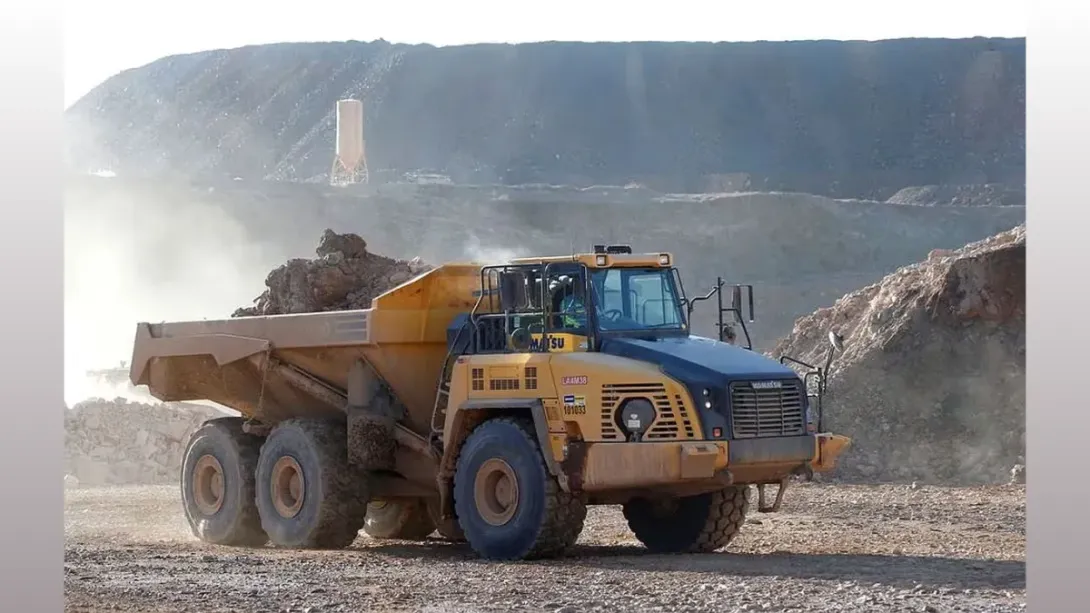
The Ministry of Mines has unveiled an extensive showcase at the India International Trade Fair (IITF) 2025, emphasizing the nation’s growing capabilities in sustainable mineral exploration, processing, and resource management. The pavilion, designed around the theme of “Sustainable Mining for a Prosperous Future,” highlights India’s advancements in critical minerals, green technologies, and digital innovations shaping the mining ecosystem. With participation from leading public sector undertakings (PSUs) and private enterprises, the exhibition underscores the ministry’s commitment to responsible mining practices and its role in powering India’s industrial and economic transformation.
Empowering India’s Mining Vision
India’s mining sector plays a pivotal role in driving the nation’s industrial growth, energy security, and infrastructure development. Recognizing this, the Ministry of Mines has leveraged the India Trade Fair 2025 platform to present its latest initiatives aimed at making mining more sustainable, transparent, and technology-driven.
The pavilion outlines the government’s focus on harnessing India’s mineral wealth—ranging from traditional resources like coal, iron ore, and bauxite to emerging critical minerals such as lithium, cobalt, and rare earth elements—essential for the energy transition and high-tech manufacturing. The ministry’s representation at the fair also reinforces its objective of aligning India’s mining policies with the broader goals of self-reliance and environmental stewardship.
Showcasing Innovation and Sustainability
At the Mines Ministry pavilion, visitors are greeted with interactive exhibits, digital displays, and models that illustrate the entire mineral value chain—from exploration and extraction to processing and end-use. The exhibition spotlights the integration of AI-driven geological mapping, drone-based surveying, and advanced mineral analytics, demonstrating how technology is revolutionizing India’s mining operations.
One of the key highlights of the showcase is the emphasis on sustainable mining practices. The ministry has featured success stories of eco-restoration of mining sites, water conservation models, and renewable-powered mining operations. By promoting a circular economy and responsible extraction, the ministry underscores its commitment to balancing resource development with ecological preservation.
Participation of Leading PSUs and Private Enterprises
Several public sector enterprises under the administrative control of the Ministry of Mines—including National Aluminium Company (NALCO), Hindustan Copper Limited (HCL), and Mineral Exploration and Consultancy Limited (MECL)—are actively participating in the trade fair.
Each of these organizations has set up thematic stalls showcasing their contributions to India’s mineral economy and their role in advancing technological excellence. For instance, NALCO has exhibited its achievements in aluminium production and green smelting technologies, while HCL is highlighting its initiatives in copper recycling and sustainable mining expansion. MECL, on the other hand, has presented its expertise in geological exploration and mineral resource assessment, emphasizing its role in identifying new reserves crucial for industrial growth.
Private mining firms and allied industries are also participating, offering insights into collaborative opportunities, innovation partnerships, and future-ready mineral supply chains.
Critical Minerals: The Future of India’s Resource Strategy
A central theme of the ministry’s presence at the fair is India’s focus on critical minerals, which have become the backbone of modern technologies such as electric vehicles (EVs), renewable energy storage systems, and semiconductors. The Ministry of Mines has been spearheading policies and collaborations to ensure secure and sustainable sourcing of these minerals.
Through initiatives such as the Critical Minerals Mission and strategic partnerships with global exploration firms, India aims to reduce import dependency and develop domestic production capacities. The trade fair exhibition presents detailed information on ongoing exploration projects, investment opportunities, and policy frameworks that support responsible extraction and global cooperation.
By showcasing these advancements, the ministry seeks to position India as a reliable global hub for critical mineral processing and trade, thereby strengthening its geopolitical and economic influence in the evolving green economy.
Digital Transformation in Mining Operations
The Mines Ministry has been actively promoting digitalization and automation across the mining sector to enhance efficiency and ensure transparency. At the IITF pavilion, the ministry has introduced demonstrations of geo-spatial data analytics, 3D mine planning tools, and blockchain-enabled tracking systems for mineral logistics.
These innovations aim to tackle long-standing challenges such as resource mismanagement, illegal mining, and inefficiencies in data handling. By digitizing the value chain, the government envisions a “Smart Mining” ecosystem that not only enhances productivity but also strengthens governance and accountability.
The integration of these technologies is part of a broader national push toward “Digital Mines India,” an initiative that seeks to modernize mining operations through data-driven decision-making and advanced monitoring systems.
Green Mining and Environmental Commitment
Sustainability remains at the heart of the Mines Ministry’s initiatives. The trade fair display places special emphasis on green mining technologies, renewable integration, and waste-to-wealth projects. The ministry’s focus on mine reclamation, afforestation drives, and pollution control systems reflects its dedication to minimizing the environmental footprint of mining activities.
Additionally, the pavilion educates visitors about India’s evolving Environmental, Social, and Governance (ESG) framework within the mining industry. This framework guides both public and private players to adopt responsible practices that promote biodiversity conservation, reduce emissions, and engage meaningfully with local communities.
The government’s approach also includes encouraging the use of solar power and green hydrogen in energy-intensive mining operations, aligning the sector with India’s net-zero carbon targets by 2070.
Investment and Policy Opportunities
The India Trade Fair also serves as an ideal venue for the Mines Ministry to engage with investors, technology developers, and international stakeholders. The ministry has been proactive in outlining its liberalized policy regime, offering incentives for exploration, simplifying licensing processes, and enabling private sector participation through transparent bidding.
Officials at the pavilion have emphasized that India’s mining framework now prioritizes ease of doing business, foreign investment facilitation, and technological collaboration. This investor-friendly environment is expected to attract both domestic and global capital into exploration, processing, and value addition.
By positioning India as an emerging mining investment destination, the ministry aims to unlock vast potential in untapped mineral reserves and strengthen the nation’s global competitiveness in the mineral economy.
Conclusion: Showcasing India’s Mining Future
The participation of the Ministry of Mines at the India International Trade Fair 2025 reflects the sector’s strategic importance to India’s economic resurgence and energy transition. Through its focus on innovation, sustainability, and investment, the ministry has demonstrated how mining can evolve into a high-tech, environmentally responsible, and globally competitive industry.
The exhibit stands as a testament to India’s growing capability to harness its natural wealth responsibly while advancing toward self-reliance and climate-conscious industrial growth. As global attention turns toward sustainable resource management, India’s mining sector—under the stewardship of the Mines Ministry—appears poised to play a defining role in shaping the world’s future resource economy.
Comments