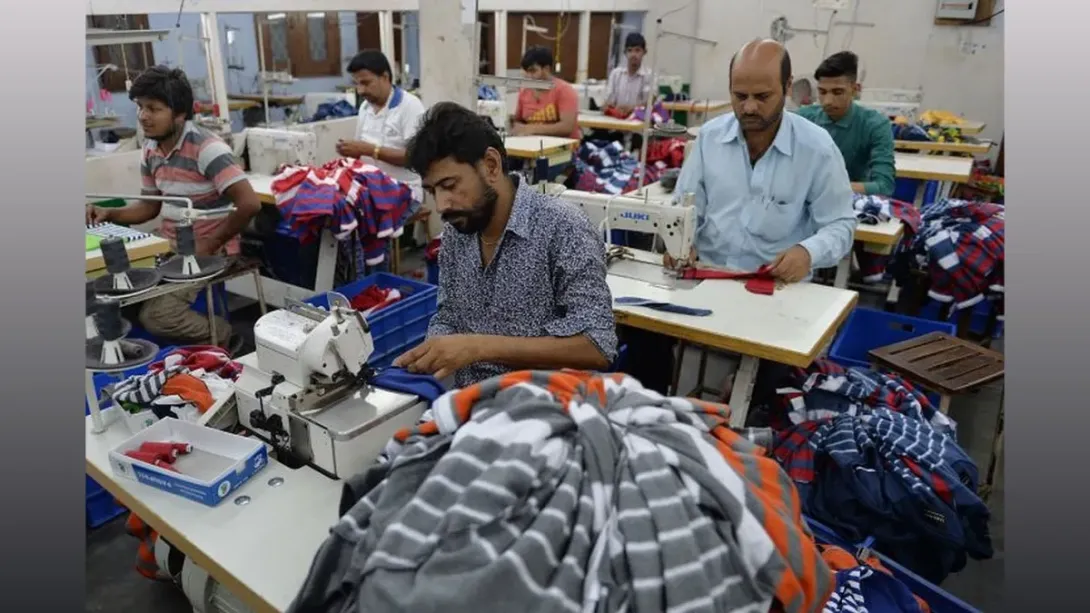
India’s apparel exports recorded a modest 1.6 percent growth during April–January 2025-26, reflecting resilience in the face of persistent global headwinds and supply chain disruptions. According to industry leadership, shipments to key international markets such as Italy, the United Kingdom, the United Arab Emirates, Saudi Arabia, Germany, and Spain posted encouraging gains. Emerging demand from Japan, Iceland, and Australia further supported export momentum. While geopolitical tensions, inflationary pressures, and soft consumer demand continue to weigh on global trade, India’s garment sector has demonstrated adaptive supply strategies and market diversification to sustain incremental growth.
Moderate Expansion Despite Global Challenges
India’s ready-made garment exports expanded 1.6 percent during the April–January period of the current fiscal year, underscoring the sector’s ability to navigate a complex international trade environment.
The performance comes at a time when global apparel demand remains uneven due to inflationary pressures in advanced economies, shifting consumption patterns, and logistical constraints. Industry stakeholders have described the growth as moderate yet strategically significant, given the external uncertainties influencing international trade flows.
Strong Uptick in Key European Markets
The Apparel Export Promotion Council (AEPC) reported notable growth across several established and emerging markets. Italy led the expansion with a 16 percent rise in apparel imports from India. Germany recorded an 8.7 percent increase, while Spain registered a 7.1 percent gain.
The United Kingdom posted growth of 4.8 percent, reflecting steady consumer demand despite broader economic caution across Europe. These improvements suggest that Indian exporters are benefiting from competitive pricing, diversified sourcing strategies adopted by international retailers, and compliance with quality and sustainability benchmarks.
Middle East Emerges as Growth Driver
Exports to the Middle East demonstrated particularly robust performance. Shipments to the United Arab Emirates grew 10.6 percent, while Saudi Arabia recorded a significant 18.5 percent increase.
Industry analysts attribute this expansion to rising retail consumption, infrastructure development, and growing brand presence in Gulf markets. The Middle East’s strategic geographic proximity and favorable trade relationships continue to position it as an important growth corridor for Indian garment manufacturers.
Gains in Asia-Pacific and Niche Markets
Beyond traditional export destinations, India’s apparel sector also reported strong performance in Japan, Iceland, and Australia. These markets, though smaller in volume compared with Europe and North America, offer higher-margin opportunities and diversified revenue streams.
Market diversification has become a central pillar of India’s export strategy. By reducing dependence on a limited number of large economies, exporters aim to mitigate risks associated with demand slowdowns or policy shifts in specific regions.
Structural Factors Supporting Export Stability
Despite global supply chain disruptions, Indian manufacturers have increasingly adopted backward integration, digitized inventory management, and faster turnaround production models. Investments in sustainable fabrics, compliance certifications, and traceable sourcing have also enhanced India’s competitiveness.
Moreover, currency fluctuations and evolving sourcing preferences among global retailers have prompted buyers to reassess supply chains, creating incremental opportunities for Indian exporters.
Industry leadership, including AEPC Chairman A Sakthivel, has emphasized that while growth remains measured, the sector’s adaptability has preserved momentum during a challenging global cycle.
Outlook: Cautious Optimism Ahead
The apparel export sector faces a mixed outlook. While geopolitical tensions and inflation continue to dampen consumer sentiment in advanced economies, stabilization in freight costs and inventory normalization could support improved order flows in the coming quarters.
For India, sustained growth will depend on continued policy support, trade facilitation measures, and technological modernization within the textile ecosystem.
In a period marked by global trade volatility, even modest expansion signals structural resilience. The 1.6 percent rise may appear incremental, but in the context of subdued global demand, it underscores India’s steady positioning within the competitive landscape of international apparel trade.
Comments