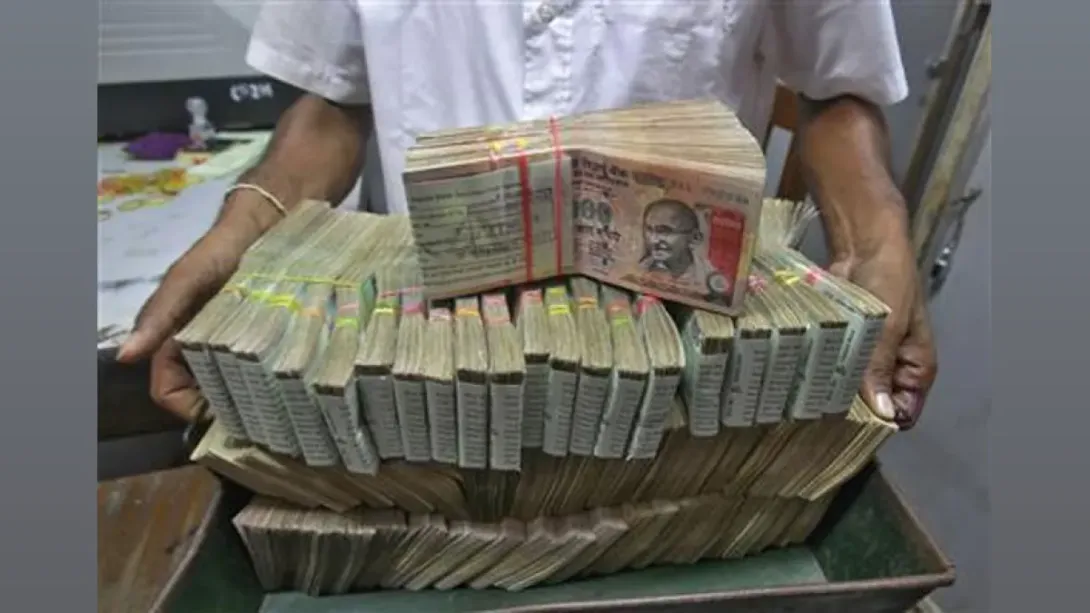
A major financial dispute has surfaced in Himachal Pradesh’s energy sector, with hydropower developers collectively owing the Himachal Pradesh State Electricity Board (HPSEB) more than ₹1,177 crore. The dues stem from costs related to feasibility studies, surveys, and detailed project reports (DPRs) conducted before project execution. Among these, the Baspa-II project alone accounts for ₹874.69 crore, making it the largest single debtor. The state government has announced its intent to pursue legal action, even escalating the matter to the Supreme Court, to ensure recovery of the outstanding amounts that have remained unpaid for years.
Massive Arrears Burden on State Power Board
The Himachal Pradesh government has revealed that several independent hydropower producers (IPPs) operating across the state owe substantial sums to the HPSEB. These dues—totalling ₹1,177.89 crore—are linked to expenses incurred during the early stages of project preparation, including site surveys, hydrological assessments, and DPR formulation.
Unlike regular electricity dues, these arrears are tied to developmental groundwork financed by the state to support private developers in building hydropower capacity. However, many companies have either delayed payment or disputed the computation, leading to prolonged financial strain on the Board.
The largest liability arises from the Baspa-II hydropower project, with outstanding dues amounting to ₹874.69 crore, representing nearly three-fourths of the total owed to the state. The magnitude of this amount underscores the fiscal challenge confronting Himachal’s power administration.
Legal Dispute Over Interest Rates Stalls Recovery
Chief Minister Sukhvinder Singh Sukhu confirmed that the prolonged delay in collection is primarily due to a dispute over the applicable interest rate. Developers argue that the rate levied by HPSEB is excessive and inconsistent with earlier contractual terms, while the Board maintains that interest must be charged in line with public finance norms to compensate for years of non-payment.
Given the impasse, the government has decided to pursue legal recourse, hiring senior advocates to represent the state’s case. “We are determined to protect Himachal’s financial interests. These dues are legitimate and will be recovered through appropriate judicial channels,” Sukhu said in the legislative assembly.
Sources within the energy department confirmed that the matter has been escalated to the Supreme Court, reflecting the government’s firm stance against concession or write-offs.
Key Projects Under Scrutiny
While Baspa-II dominates the list, several other hydropower projects have also defaulted on their dues. These include entities linked to both public and private operators, many of which are now under audit review. The government has also issued notices to projects like Baira Siul, where lease or concession periods nearing 40 years are under re-evaluation.
Additionally, the Bhakra Beas Management Board (BBMB) and other hydel power entities are being examined for potential arrears linked to land use and operational agreements. Officials have emphasized that recovery is not only a financial imperative but also a matter of accountability within the state’s natural resource management framework.
Economic and Policy Implications
The mounting dues have significant implications for Himachal’s public finances. The HPSEB, which plays a central role in the state’s energy ecosystem, depends heavily on timely payments from developers to fund grid maintenance, rural electrification, and infrastructure upgrades.
Recovering ₹1,177 crore would provide much-needed fiscal relief, especially at a time when the state is expanding investment in renewable energy and grid modernization. The delay has forced HPSEB to rely on internal borrowing and government support, straining its liquidity position.
From a policy perspective, the episode has exposed gaps in contractual enforcement and project governance. Experts argue that future agreements should clearly define payment timelines, interest liabilities, and arbitration procedures to prevent such large-scale arrears.
Hydropower’s Strategic Role in Himachal’s Economy
Himachal Pradesh, often called the “Power State” of India, possesses a hydropower potential exceeding 27,000 MW, of which more than 10,500 MW has already been harnessed. The sector contributes significantly to the state’s economy through royalty payments, employment, and interstate energy sales.
However, this latest controversy highlights a persistent challenge—balancing public investment and private participation. While private developers bring technical expertise and capital, the government bears a substantial portion of the preliminary project costs. When these costs remain unrecovered, it undermines fiscal discipline and limits the state’s ability to reinvest in future projects.
Energy analysts believe the recovery drive could serve as a test case for reform, potentially prompting new norms in how pre-development expenses are financed and billed.
Outlook: Toward Stronger Financial Governance
The Himachal Pradesh government’s decision to escalate the matter legally signals a tougher approach toward fiscal compliance in the hydropower sector. Officials indicate that beyond recovery, the administration is reviewing policy mechanisms to prevent similar defaults in upcoming projects.
Proposals include:
- Establishing an escrow system to ensure upfront payment of pre-construction costs.
- Introducing penal interest clauses for delayed settlements.
- Mandating annual audits to monitor financial performance and compliance by private developers.
Industry observers note that such measures could enhance investor confidence by promoting transparency and ensuring fair accountability between the state and developers.
Conclusion
The ongoing standoff between Himachal Pradesh’s power board and hydropower developers is more than a financial dispute—it’s a defining moment for energy sector governance in India’s hill states. Recovering the ₹1,177 crore owed to the HPSEB is crucial not only for fiscal stability but also for restoring the principle that public resources must yield equitable returns.
As the matter advances through legal channels, it is likely to set an important precedent for future hydropower projects nationwide, compelling both governments and investors to adopt clearer, more enforceable financial frameworks.
Comments