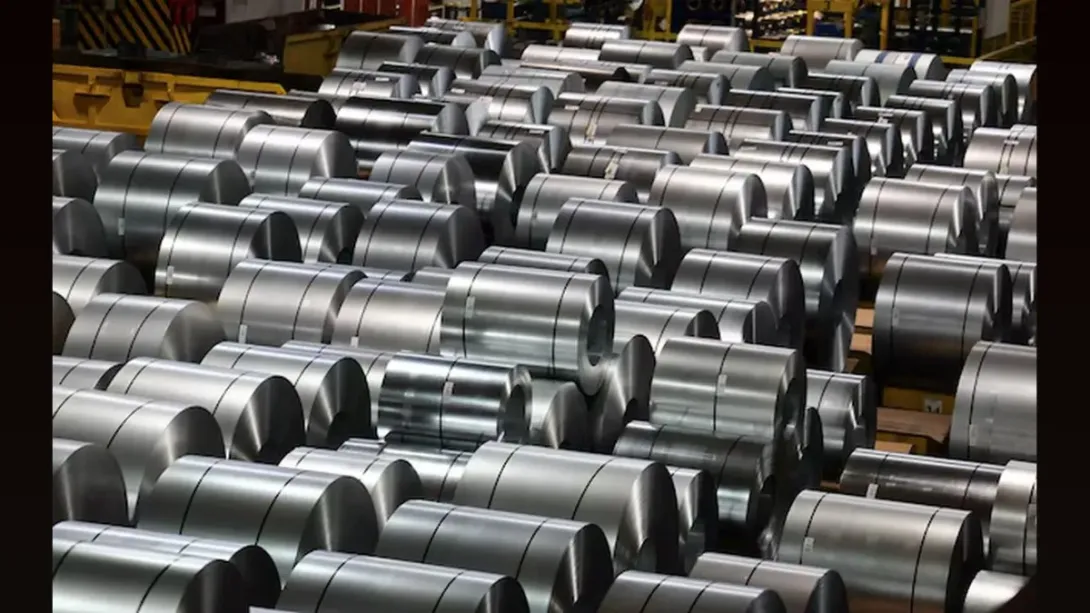
The ambitious Rs. 1.5 lakh crore steel project proposed by ArcelorMittal Nippon Steel India Limited (AMNSIL) in Andhra Pradesh has encountered a setback after the Expert Appraisal Committee (EAC) under the Ministry of Environment, Forest and Climate Change deferred its environmental clearance. The delay stems from ambiguity surrounding new siting guidelines introduced earlier this year under notification GSR 85(E). The committee has sought further clarification from the ministry’s Controller of Pollution Division before proceeding. The deferment, though procedural, raises questions about regulatory clarity, investment timelines, and India’s industrial expansion pace.
A Mega Project Caught in Bureaucratic Crosscurrents
ArcelorMittal Nippon Steel India Limited, a joint venture between global steel giants ArcelorMittal and Japan’s Nippon Steel, has proposed constructing a massive integrated steel plant in Andhra Pradesh’s Anakapalli district. Designed to produce 8.2 million tonnes of crude steel per annum, the project represents one of the largest private-sector investments in India’s metals and infrastructure segment, pegged at approximately Rs. 1.50 lakh crore.
The plant, once operational, is expected to generate 3,000 direct and 4,500 indirect jobs. During construction, employment could peak at around 23,000, creating a substantial multiplier effect across ancillary industries. The company has also committed Rs. 3,540 crore toward environmental management, with an annual recurring expense of Rs. 355 crore, signaling its intent to align with sustainable industrial norms.
Clearance Deferred: Regulatory Ambiguity at Play
The EAC’s decision to defer environmental clearance stems from a technical concern linked to the GSR 85(E) notification issued in January 2025. The notification, which revises industrial siting criteria, has created uncertainty about its applicability to projects previously granted clearances.
Although AMNSIL’s site had an earlier environmental approval, the new regulation mandates additional scrutiny for industrial locations based on revised environmental and zoning parameters. The Andhra Pradesh Pollution Control Board (APPCB) had already issued a compliance certificate, but the EAC’s legal and technical experts found discrepancies in interpretation and sought further clarification from the Controller of Pollution Division.
This procedural pause indicates that the Ministry itself may still be reconciling new regulatory requirements with ongoing large-scale projects, leaving investors in a temporary limbo.
The Broader Context: India’s Steel Ambitions and Policy Hurdles
The deferment arrives at a pivotal moment for India’s steel industry. The government has set an ambitious goal to ramp up the nation’s crude steel capacity to 300 million tonnes by 2030, positioning India as a global manufacturing hub. Projects like AMNSIL’s Andhra plant are critical to achieving that target while stimulating regional growth.
However, such large-scale industrial undertakings often collide with evolving environmental norms and procedural bottlenecks. The current delay underscores the friction between India’s aggressive industrialization agenda and the bureaucracy’s cautious adherence to regulatory frameworks. For foreign investors, particularly those operating in joint ventures with global majors, the episode highlights the persistent challenge of navigating India’s complex approval ecosystem.
Economic Implications: Ripple Effects Beyond the Project
The deferral could have immediate and ripple effects. From a financial standpoint, it delays capital deployment schedules, pushes back project commissioning timelines, and potentially affects cost escalations tied to raw materials, logistics, and interest burdens.
At a regional level, Andhra Pradesh—keen on accelerating industrial investment—stands to temporarily lose momentum in attracting allied industries. Infrastructure upgrades, housing projects, and port expansions planned around the Anakapalli belt may also face deferments pending project clarity.
Moreover, investors and lenders monitoring India’s investment climate may view this as a signal for more cautious due diligence, particularly on regulatory front-loading for projects exceeding Rs. 10,000 crore.
Company and Government Responses
While the EAC’s decision was procedural rather than punitive, it has prompted a wave of consultations between the Ministry, state authorities, and the company. AMNSIL is said to be cooperating with the regulators, providing documentation and compliance reports as requested.
Government insiders suggest that the ministry may soon issue a clarification or amendment to the GSR 85(E) notification to address ambiguities affecting legacy or transitional projects. Once clarified, the clearance process is expected to resume swiftly.
Industry observers note that such procedural pauses, while common in India’s regulatory landscape, often serve as catalysts for improving compliance mechanisms and ensuring that new industrial corridors evolve within environmentally responsible frameworks.
Looking Ahead: A Test of Policy Consistency
While the setback may only be temporary, it underscores the need for policy predictability and regulatory synchronization. As India courts record foreign direct investment into manufacturing, particularly in capital-intensive sectors such as steel, cement, and renewables, consistency in approval timelines and regulatory interpretation will play a decisive role in sustaining investor confidence.
For ArcelorMittal Nippon Steel, the Andhra project remains a cornerstone of its long-term India strategy. The company’s strong financial position and global experience provide resilience against short-term procedural hiccups. However, for policymakers, the episode serves as a reminder that India’s industrial growth narrative depends as much on administrative agility as on investor appetite.
Conclusion
The deferment of ArcelorMittal Nippon Steel’s environmental clearance in Andhra Pradesh illustrates the delicate balance between environmental accountability and industrial ambition. While the Rs. 1.5 lakh crore project remains firmly on track in the long term, the temporary hold underscores how policy clarity is as critical as capital investment. If swiftly resolved, the episode may ultimately reinforce India’s commitment to sustainable growth—proving that progress and protection can indeed coexist in the nation’s evolving industrial story.
Comments