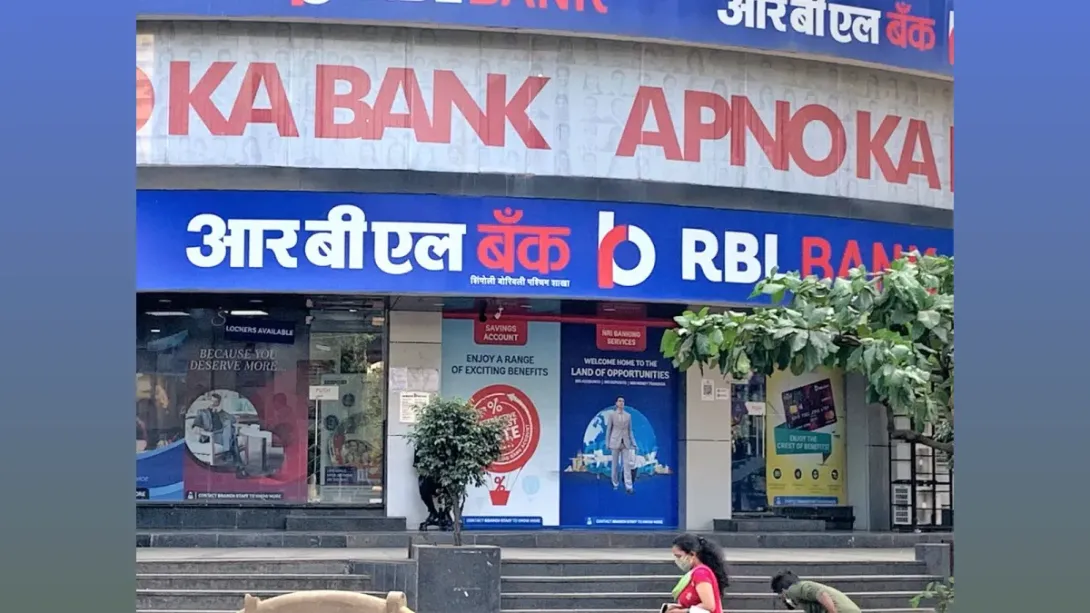
Emirates NBD Bank, one of the Middle East’s largest financial institutions, will open a public offer to acquire up to 26% of RBL Bank starting December 12, 2025. The open offer, priced at Rs. 280 per share, is part of Emirates NBD’s broader plan to secure a 60% stake in the Indian private lender through a preferential share issue and open market purchase. If fully subscribed, the open offer could amount to Rs. 11,636 crore, marking one of the largest foreign investments in India’s financial sector. The process will remain open until December 26, pending regulatory approvals.
Emirates NBD’s Strategic Move into Indian Banking
The proposed acquisition marks a significant milestone for Emirates NBD’s regional expansion strategy, highlighting its intent to establish a long-term presence in India’s fast-growing banking industry. The Dubai-based lender plans to subscribe to a preferential share issue that would raise its holding to approximately 60% of RBL Bank’s expanded equity base, subject to Reserve Bank of India (RBI) clearance.
In accordance with SEBI’s takeover code (SAST Regulations), any acquirer purchasing 25% or more in an Indian listed entity must extend an open offer to the public. Consequently, Emirates NBD’s offer to purchase up to 41.56 crore shares — equivalent to 26% of RBL Bank’s equity — was triggered. The offer price of Rs. 280 per share represents a premium to the current market rate, signaling investor confidence in the deal’s long-term value creation.
Deal Size, Timeline, and Valuation Impact
At Rs. 280 per share, the total consideration for the open offer stands at Rs. 11,636 crore if all eligible shareholders participate. The offer will open on December 12 and close on December 26, 2025. The final allotment and payment to tendering shareholders are expected to follow soon after regulatory validation and settlement procedures.
The investment follows Emirates NBD’s broader commitment to inject around USD 3 billion (approximately Rs. 25,000 crore) into RBL Bank. This represents one of the largest single foreign direct investments (FDIs) in India’s financial services sector, underscoring the UAE lender’s confidence in the country’s economic fundamentals and banking growth potential.
Regulatory Considerations and Ownership Limits
Foreign ownership in private sector banks in India is capped at 74%, combining both direct and portfolio investment. Individual foreign investors, however, are typically restricted to 15%, unless a special exemption is granted by the RBI. For Emirates NBD’s proposed 60% holding, regulatory approval will therefore be decisive.
The deal structure suggests that the preferential allotment may be executed in tranches, depending on the RBI’s clearance on the maximum permissible holding. The open offer, while mandatory, will allow existing shareholders an opportunity to exit at a premium valuation.
Implications for RBL Bank and the Sector
For RBL Bank, the capital infusion could prove transformational. The funds are expected to bolster its capital adequacy ratio, strengthen its lending capacity, and accelerate growth across retail, SME, and digital banking segments. The bank has been steadily rebuilding investor confidence after facing asset quality concerns in recent years.
Industry analysts view Emirates NBD’s entry as a validation of India’s mid-tier private banking potential. The deal could serve as a model for future cross-border consolidation in the financial sector, as global banks seek exposure to India’s rising credit demand and digital financial ecosystem.
Investor Perspective and Market Outlook
RBL Bank shares have seen heightened investor interest since reports of the Emirates NBD investment surfaced. Analysts note that while the Rs. 280 offer price provides a strong benchmark, the eventual success of the deal will depend on regulatory timing and shareholder participation levels.
Market observers expect that if the transaction is executed smoothly, RBL Bank could benefit from enhanced liquidity, governance reforms, and international best practices introduced by Emirates NBD. The collaboration also positions the Indian lender to deepen its presence in trade finance, cross-border remittances, and wealth management services — areas where Emirates NBD brings considerable expertise.
Conclusion
Emirates NBD’s open offer for RBL Bank signifies a landmark moment in India’s banking landscape — blending global capital with domestic potential. Beyond the immediate infusion of funds, the transaction may reshape the competitive dynamics of the private banking sector, attracting further foreign participation. With the offer window opening on December 12, all eyes are now on the RBI’s regulatory nod and shareholder response, which will determine the contours of one of India’s most consequential financial transactions of the decade.
Comments